Monday, April 23, 2012

FBI files detail Muslims' religious practices

Records obtained from the U.S. Federal Bureau of Investigation's division in San Francisco show that the bureau secretly used its Muslim outreach efforts to collect intelligence on religious activities protected by the Constitution, according to the American Civil Liberties Union.

Under the U.S. Privacy Act, the FBI is generally prohibited from maintaining records on how people practice their religion unless there is a clear law enforcement purpose. ACLU lawyers said the documents, which the organization obtained under the Freedom of Information Act and released Tuesday, showed violations of that law.
"Everyone understands that the FBI has a job to do, but it is wrong and counterproductive for the bureau to target American Muslim religious groups for secret intelligence gathering and place innocents at risk of investigation as national security threats," ACLU attorney Hina Shamsi said in a news release.
The documents are from 2004 through 2008, before the FBI established a formal community outreach program and before it put in place sweeping new rules governing the collection of intelligence.

FBI says notes on religious activity appropriate

After reviewing the ACLU documents, the FBI said the reports that contained notes about religious activity were appropriate because the agents were meeting with members of the Muslim community for law enforcement purposes.
Since the 2001 terrorist attacks, the FBI has stepped up its outreach to Muslim neighborhoods and efforts to recruit sources and gather intelligence in those areas. Though the federal government says those two efforts are completely separate, civil rights lawyers and some Muslims have complained that the FBI uses one to accomplish the other. The ACLU released a similar batch of documents last year.
The gathering of intelligence inside mosques has been the subject of public debate recently, following an Associated Press investigation into the New York Police Department's use of undercover officers and informants to report on the contents of sermons and the conversations inside mosques. Police secretly jotted down license plate numbers and snapped pictures as worshippers arriving at services, documents show.
In the case of the FBI, the meetings described in the ACLU documents were all overt — meaning FBI agents identified themselves. Typically they handed out business cards and asked how the FBI could help with problems in the community. Though it is not specified in the documents, it is common practice for the FBI to take notes during such visits, meaning participants in such conversations would know the FBI was documenting its visit.

Documents obtained from 2004-2008

"These 2004-2008 documents reflect that information was collected within the scope of an authorized law enforcement activity, whether investigation or liaison, including activities designed to strengthen relationships in various communities," FBI spokesman Michael Kortan said.
"Since that time, the FBI has formalized its community relations program to emphasize a greater distinction between outreach and operational activities."
Many of those whose businesses were catalogued in NYPD files said they had no problem with police collecting information, but wished the police had engaged them openly.
The ACLU, however, maintains that even during the FBI visits, people had no way to know that details about their religious practices were being stored.
"The FBI attended the afternoon prayer as well as a sermon," the FBI wrote in a 2005 document from a mosque in the northern California town of Seaside, Calif. The sermon "warned of the evils associated with the practice of earning interest on money."
FBI agents are required to document their contacts and their activities. In the documents released by the ACLU, religious information was included as an aside and was not the focus of the reports. But because the information was entered into FBI files at all, it was available to be searched by investigators nationwide.
By Syed Khawar Ali.

Friday, April 20, 2012

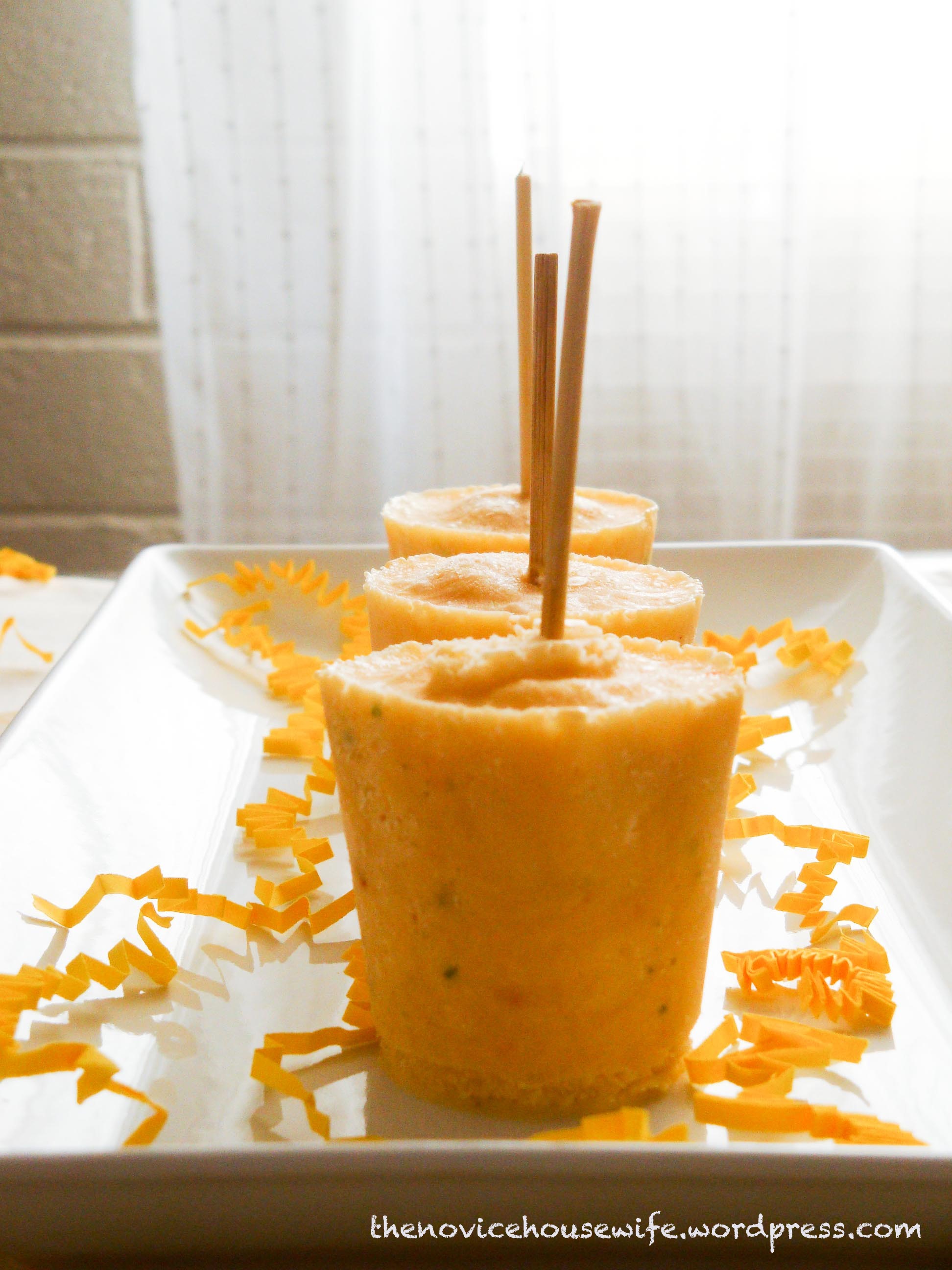
Garam Masala Tuesdays: Kavita Massi’s Mango Kulfi


Its getting hot- quite hot here in our small town. Back in India, its getting even hotter. Thus, its only apt that I post this for today’s GMT- a sweet treat to beat the escalating summer heat-Kulfi. And since ’tis the season for mangoes, I thought of taking it up a notch and made Mango Kulfi :) !
In India, kulfi – a frozen milk-based dessert- is a street-vendor food. Sellers keep the frozen treat cold in a special ice and salt filled big pot called a matka. Although the usual way to serve it is with a simple garnish of nuts, some vendors also serve sweetened vermicelli rice noodles with Kulfi. Some serve it in small earthernware pots called matkas- and this kind is called Matka Kulfi. For me the name Kulfi always reminds me of this vendor who used to sell kulfi outsideMoet’s in Defence Colony, Delhi. I loved his Kulfis. I am not a falooda fan, so would just have the stick of Kulfi. Kulfi is also quite a popular menu item at Indian weddings, especially summer weddings.
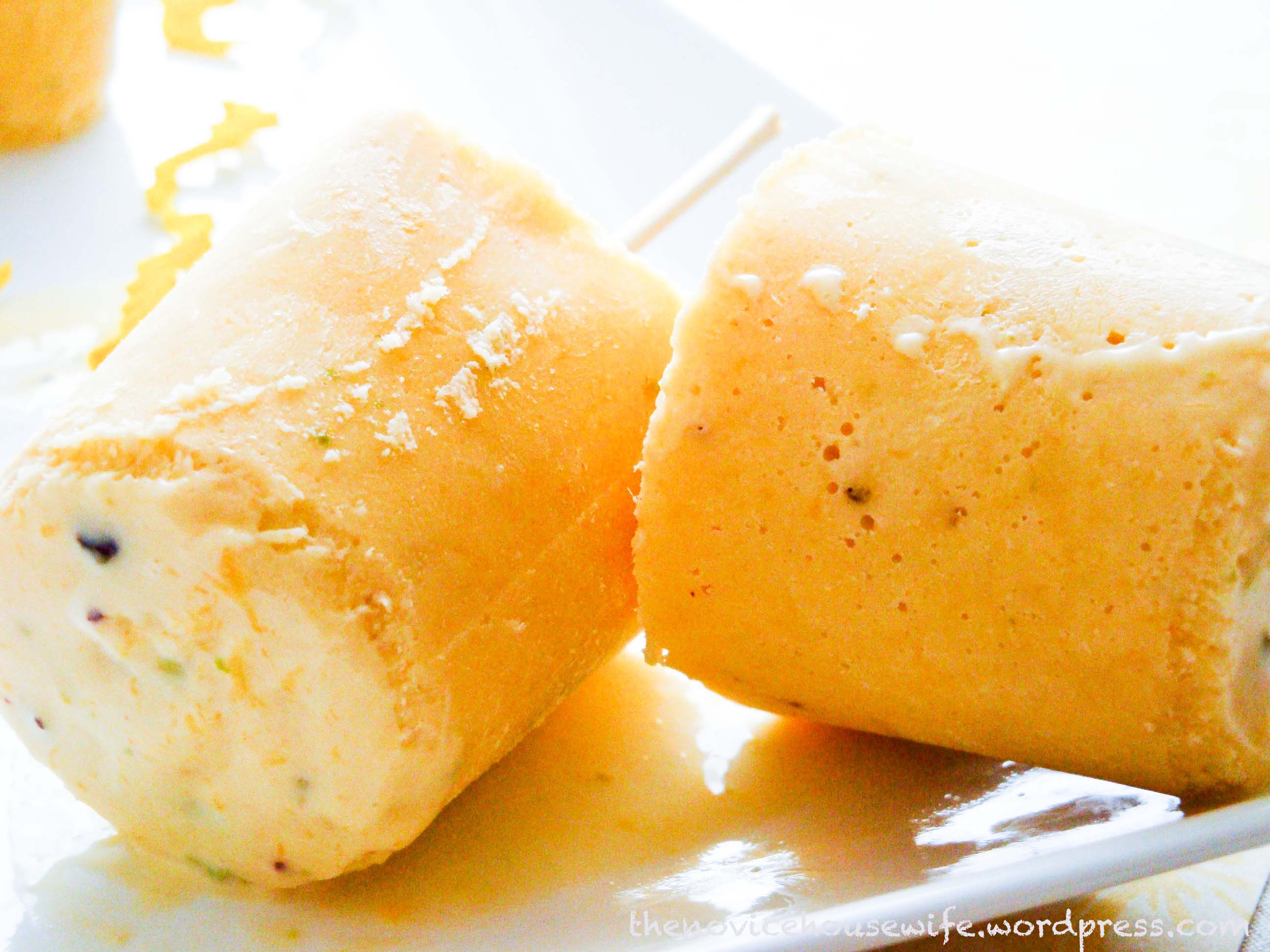
Unlike western ice cream, Kulfi is not whipped, resulting in a solid, dense frozen dessert that takes a long time to melt- hence the perfect treat during a hot summer day- you have no worries of it melting it on your shirt or ruining that new summer dress you bought!
It is believed that the first Kulfi was made by freezing Rabri (reduced milk and sugar) in ice. During the Mughal empire reign in India, the ice was brought in from Hindu Kush to Delhi. For a long time the privileges of having Kulfi were limited to royalty and upper levels of aristocracy in India until modern day refrigeration technology reached South Asia.
Traditionally, Kulfi is prepared by evaporating the heck out of milk by slow cooking it and stirring it continuously so that the milk does not stick to the bottom of the vessel and burn. This is done until the volume of the milk is reduced by more than half and you get an extremely thick milk. This takes hours. After the milk is reduced, sugar is added while still hot. Nuts like pistachio or almond and flavorings like saffron, rose water, kewra are added. The mix is then frozen in tight sealed molds that are then submerged in ice mixed with salt to speed up the freezing process. The ice/salt mix, along with its submerged kulfi molds, is placed in earthen pots or matkas that provide insulation from the external heat and slow down the melting of ice. Kulfi prepared in this manner is hence called ‘Matka Kulfi’. Kulfi, thus prepared by slow freezing, also renders a unique smooth mouth feel that is devoid of water crystallization.
I also read that aging the mixture overnight (about 12 hours) in the refrigerator prior to start freezing, gives a better Kulfi.
Now, now, I would not dream to suggest you all to be in the kitchen for hours at a stretch especially in this heat. Of course you could do all that I mentioned above, but one of Vikram’s relatives whom I fondly call, Kavita Massi, gave me a “cheat’s version” for making Kulfi. And it’s pretty easy with fabulous results!
The best part of the recipe is that it can be assembled in minutes. You don’t have to slave for hours to make this dessert. And the beauty of any Kulfi recipe is that it’s flexible to any addition. If you do not have mango on hand you can omit it (of course, you will need to add a few tbsp of sugar but do not go overboard with the sugar as it affects the creaminess of the kulfi). You can also omit the pistachio, instead you can choose to add rose water, cardamom or go a little on the wild side and add avocado, strawberry or orange! No matter what flavors you choose, you will have a wonderful treat to bite into!
I had made these treats when we had a few of our friends over and had quite a few left over as the recipe yields quite a lot. V was quite happy because he loved the kulfi. As I have already mentioned before, on occasions more than once, V is not much of a sweet fan. More often than not I have to ask him whether he wants something sweet, and after a lot of contemplating, he says a very disheartened “ok”. But, not with this dessert. (I think I have stumbled on something great here.) V actually asks for this Kulfi (and let me also mention here, he hardly used to eat Kulfi back in India. So he must really like it!) Even if I am full and assume that he is too and as such don’t serve any sweet, he actually suggests that we should have a Kulfi each! That should be evidence enough to convince you to try this recipe. This is the biggest testimonial that the dessert is good if V asks for it. (He had it twice yesterday- and both times I did not even have to remind him that there is Kulfi in the refrigerator).

KAVITA AUNTY’s MANGO KULFI

Makes 18 dixie cup sized Kulfi
The Kulfi keeps for a month in the freezer (so I recommend not to reduce quantities)
Ingredients
  • 1 (12 fl oz) tin evaporated milk
  • 1 (14 oz) tin condensed milk
  • 1 cup heavy cream, (Kavita Massi says its optional, but I feel it gives the Kulfi a smoother texture, though I haven’t tried otherwise)
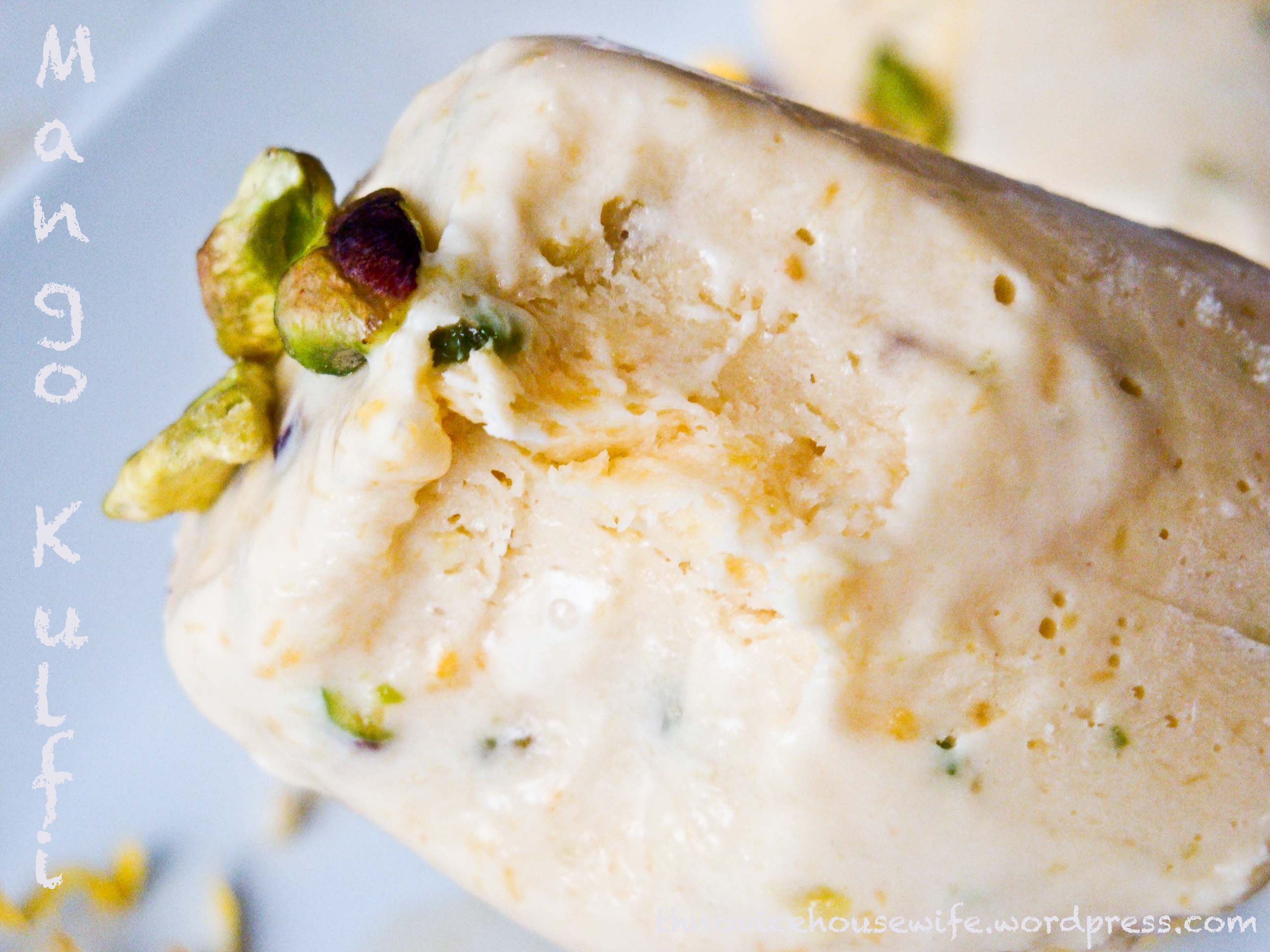
  • 1/2 cup pistachio, coarsely crushed into small pieces
  • few strands saffron, optional
  • 3-4 cardamoms, powdered
  • 3 mangoes, pureed
  • 18 (3 oz) dixie cups (or popsicle moulds, in case you have them)
  • 18 popsicle sticks (If you can’t find them in your local grocery store- like I couldn’t, you can use the wood skewers that one uses for barbeques and break each into 3 equal pieces- they work like a charm!)
Directions
  1. Mix together the milks and cream. Mix in the pureed mango pulp. Add in the flavorings and the nuts.
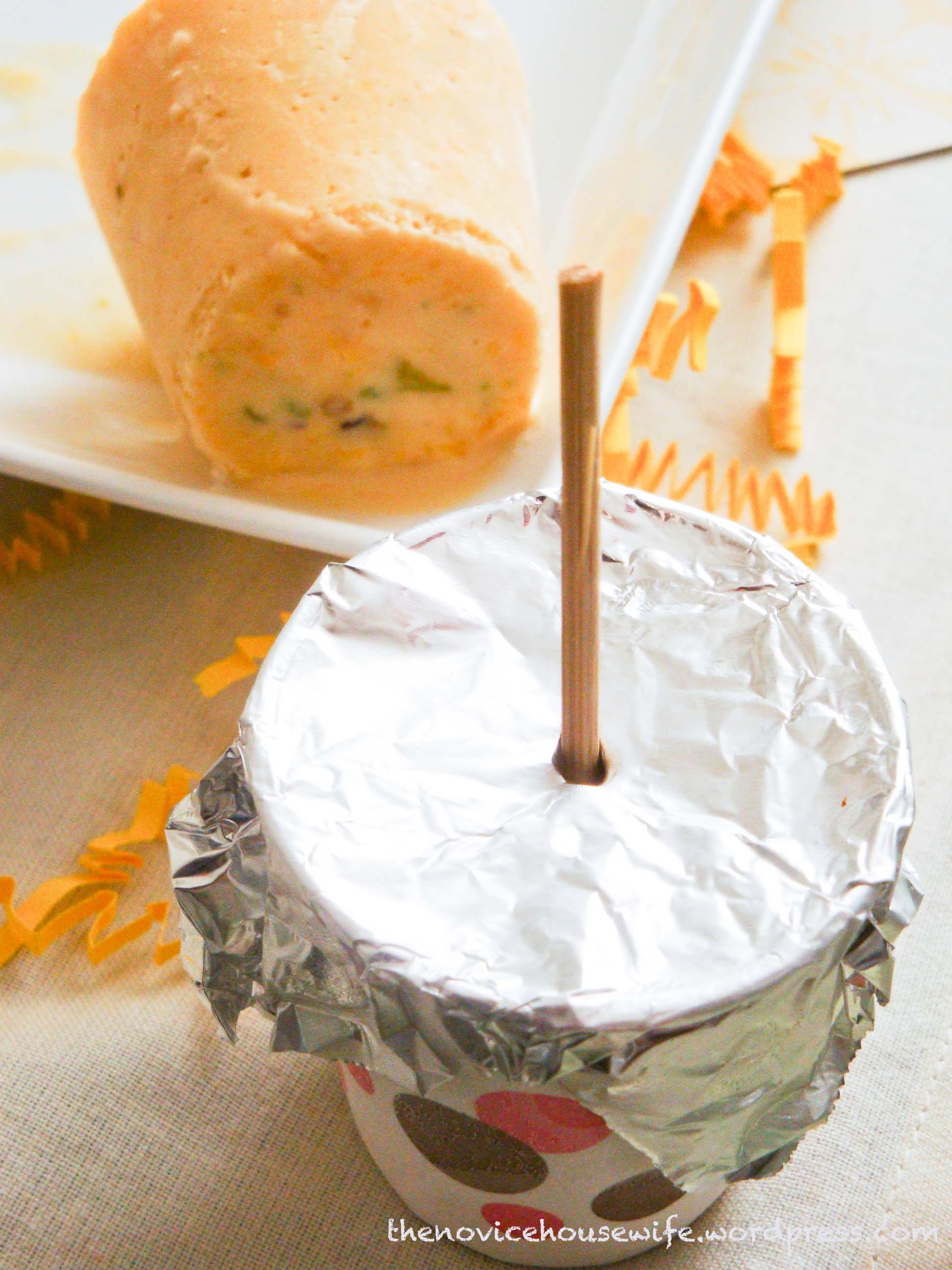
  2. Pour in your popsicle moulds/ dixie cups or an ice cube tray and freeze for atleast 6-8 hours or overnight. (If using dixie cups, once you pour the kulfi mixture in, cover the cups with aluminium foil and pierce a small hole in the foil with the skewers sticks. Make sure the sticks are straight. Put the cups in the freezer until frozen. The Kulfi expands as it freezes. Don’t fill the canister or molds more than two-thirds full.)
  3. When ready to serve, remove the moulds from the freezer and just roll them between your hands. The heat will melt the kulfi a bit and it would be easier to remove the kulfi from the molds.
  4. Serve garnished with some pistachio nuts or with sweetened rose water vermicelli, or just have plain. Any way you have, you won’t be disappointed!

Wednesday, April 18, 2012

There is more to you than the colour of your skin

This may come as a surprise to you, but even women who till fields care about their complexion.This insecurity has risen from the relentless advertisements that preach ‘fairness’ as the key to all happiness. According to the media, being dark is a disadvantage akin to being disabled; a disadvantage so severe, that it could result in you remaining unmarried for the rest of your life.

Our media has brainwashed people into believing that they may have absolutely no chance of ever being happy or married if they are dark. A Pakistani woman may face a multitude of issues; she might have eight children, a gambler for a husband, and the pressure of dowry for her daughters. With all these concerns you might think that this woman’s biggest worry in life is just putting food on the table. Wrong. It’s trying to get her daughters to be fairer than they already are.
The media has developed yet another reason for women to feel dissatisfied; if they are not fair, they have no chance of progress in the world. People have fallen into the façade of  “the fairer the better,” giving in to local advertisements and endorsing skin bleaching products such as Fair & Lovely. Thus, they end up spending money on products that they don’t need.
I find it offensive and appalling that advertisements choose to display darker girls as plain and unattractive. They are shown with disheveled hair and desaturated skin. However, after they use  the pigment changers, they transform into happy, fair-skinned, beauties. They are shown with husbands, wealth, status, and background music that makes it look like their life is just perfect.
These advertisements feed off the sentiments of the insecure because they know that whilst an average Pakistani woman may not be able to go globe-trotting or have a lavish wedding, she can feel good about herself by applying a product that promises her a better life and a lighter skin tone – the image of perfection in the South Asian society. Pakistani streets are laden with billboards and posters featuring light-skinned models and actresses. These do not reflect the majority of the Pakistani population; dark-skinned, poor, hard working women.
Ancient India associated fair skin with the upper classes of society, while the darker skinned individuals were associated with farming, working, and the lower classes in general. While this attitude of distinguishing people based on the colour of their skin still persists, India has a huge population of South Asians who are predominantly dark-skinned. Though their media has been partial toward fairer actresses and models, there has been a shift over the last few years and several darker actresses, such as Bipasha Basu and Nandita Das, have been very successful and well-received on-screen. Regardless of this progress, several ad campaigns across India prefer light-skinned actresses and celebrities to endorse their products which is a highly unrealistic perception of beauty for South Asian masses who don’t necessarily fit this criteria.
Asian girls with darker pigmentation suffer taunts, mockery and ridicule at the hands of their peers. Evidence shows that in South Asian societies, darker girls face challenges when finding employment, getting married, and earning equal respect and recognition as their fairer counterparts even today. Mothers look for gori biwis  (fair wives) for their sons, discarding even the prospect of a kaali (dark) daughter-in-law. Girls are seldom allowed to play out in the sun for too long because of the fear of developing a tan. In some horrendous cases, women have been so negatively affected by complexes about the colour of their skin, that they have resorted to using extremely toxic chemicals to lighten their skin-colour. This has led them to develop mental disorders and psychological traumas in the process.
Continents away in North America, where I currently work and reside, there is the opposite conundrum that is equally disturbing and worrisome. Women are risking getting skin cancer, skin disorders and permanent pigmentation damage by exposing their bodies to harmful rays in tanning beds that are sprouting up in salons everywhere. “Pale” as they like to call it, isn’t really ‘in’ right now and women will go to all extremes to fit in and conform to society’s expectations of weight, skin, colour and beauty.
After all is said and done, let’s take a step back and re-evaluate what we consider beautiful, the impact of it on the world, and the unrealistic expectations and pressures put on women to to toe this line. Practices that require indulgence that are harmful to the health is a tumour to the society. They are extremely detrimental and are created by corporate fiends for profiteering purposes. Social stigmas keep making their way into the lives of the insecure, tormenting them until they succumb and begin mutilating their own skin and body parts in the quest for image perfection. The world has enough problems, and we do not need the unnecessary burden of self-loathing to be added to this list.

The day I wore a niqab

Books have been written about it, feminists have insulted it, Muslim feminists, however, have defended it, and international laws are being passed against it. While there are some extreme cases where women are forced to wear a niqab (veil), most of the niqab-wearing women I know in Toronto and Karachi wear it due to a personal choice. 
I have some experience with the performing arts and expression, whereby one uses the body and it’s form as a canvas to initiate reaction and to enable visual dialogue between the performance artist and the viewer. Therefore, as a social and creative experiment, I decided to take on the niqab for a day in a largely multi-cultural and tolerant society.
My first stop was the  station where I waited amongst the early risers in their suits, heels, polished shoes and winter jackets for the morning train. Almost every other person gawked at me, trying to be discreet, but failing miserably.
It had started. The stigma; the discomfort I was causing. I was supposed to conform and wear formal, Western work attire. Instead of looking away, I stared back with my kohl-rimmed eyes, excited for the rest of the day to proceed.
However, I realised that their gaze held another sentiment: pity. I figured that in their minds any woman who chooses to take advantage of the Western mottos of independence and freedom, and dresses as she pleases, would never be caught dead in this black garb.
I could hear their thoughts: A radical, mullah husband must have forced her into this male chauvinistic, suppressive piece of clothing. While Canada has a large population of hijabis who have assimilated into North American culture quite wellthe niqab, to this day, causes quite a stir.
Ignoring the stares I proceeded to my destination; the art gallery I worked at.
“Excuse me, ma’am… oh wait… Mariam? What on Earth… get the hell out of that right now… is this a joke?,” spat out the owner.  I calmly revealed that I was getting in touch with my Muslim roots.
“None of this in my space, I am not paying you to discover your roots here, you hear me?” she said, ordering me to remove my niqab.  I refused and was asked to take the day off and recuperate my brains at home.
Did I have no right over how I covered my own body? If we had the right to uncover it, what gave others the right to judge us for covering it? Moreover, I was the same person underneath the niqab, in no way compromising upon creativity, intelligence and work ethics. If anything, I was presenting myself in the least superficial way possible, but getting flack for doing so.
I proceeded to a meeting scheduled with potential clients looking for a wedding photographer. They had gone over my portfolio and sounded enthusiastic over the phone. They were of German descent, cultured and educated; there was no way they would give me the cold shoulder for wearing a niqab.
But I was wrong.
As I sat in the lobby of the hotel waiting for them, I attracted questioning gazes, blatant stares and harsh looks. The couple entered, glowing and looking happy and in love and proceeded to the sitting area. They scanned the lobby before taking their seats. Finally, I stood up and took a few tentative steps toward them.
“George and Carla? What a pleasure it is to finally meet you. Let’s discuss some ideas, shall we?” I said excitedly.
Pin drop silence.
“Is everything okay?” I implored.
“It’s just that… well… we were expecting someone… errr… umm” George sputtered, at a loss for words.
“Someone dressed a little differently, perhaps?,”a hint of humour in my tone. “My dressing shouldn’t change anything. I am a hard working photographer and I will deliver, that I promise you. Shall we proceed?”
“Actually… my fiancé and I must dash, we’ll get back to you via e-mail at a later date,”and saying that they rushed out the door.
I never received another e-mail or phone call from them.
Moving on, I was ready to meet friends for lunch – Pakistanis who considered themselves liberal, free minded and progressive.  Though not very religious, they were still culturally Muslim so I was sure they would be more accepting of my idea.
“Mariam! Is that you under there? You silly goose what are you doing?” one of them screeched in the middle of a well-known Thai restaurant.
“Well… if you must know, I’m getting back in touch with my Muslim roots and giving Islamic spirituality a go,” I replied, expecting encouragement.
“Oh please, you can’t party, be a social artist and wake up one day wearing that,” they scoffed, their unease and embarrassment at being seen with a woman in a niqab apparent.“You are either born with that mindset or you are not.”
I felt torn. I couldn’t be an artist, socialise, dress the way I want to or get in touch with the religion I was born into if I hadn’t lived a certain way? It was an unsettling feeling, because I have never judged another human being over their apparel or religious practice. My social network consists of various beliefs – Zoroastrians, Christians, Hindus, Sikhs, Buddhists, Jews, atheists, agnostics and Muslims from all walks of life – and I wholly respect their traditions and values, because that is the mark of tolerance.
That day, I got all the answers I needed and I was ready for thorough reflection.
No one forced me to wear it, I had not been beaten into submission and there was no religious reason behind my project; it was conducted to challenge and motivate society into seeing their intolerance and impatience with the other, the foreign, the “pariah”.
We are living in a world where appearances, superficiality, conformity and social imitation are required to succeed and gain acceptance. Much like those that dare to be different, I was misunderstood, instantly rejected and scrutinised for making a choice regarding my clothes – a right that should be available to everyone in a modern and progressive society.
Read more by Mariam here or follow her on Twitter @mariammagsi